 Muhtar Movers
Who You Gonna Call?
A successful move starts with the right packing. This comprehensive guide will help you understand different box types, sizes, and how many you'll need for a stress-free move.
Get Your Free Moving QuoteChoose the right box for every item in your home
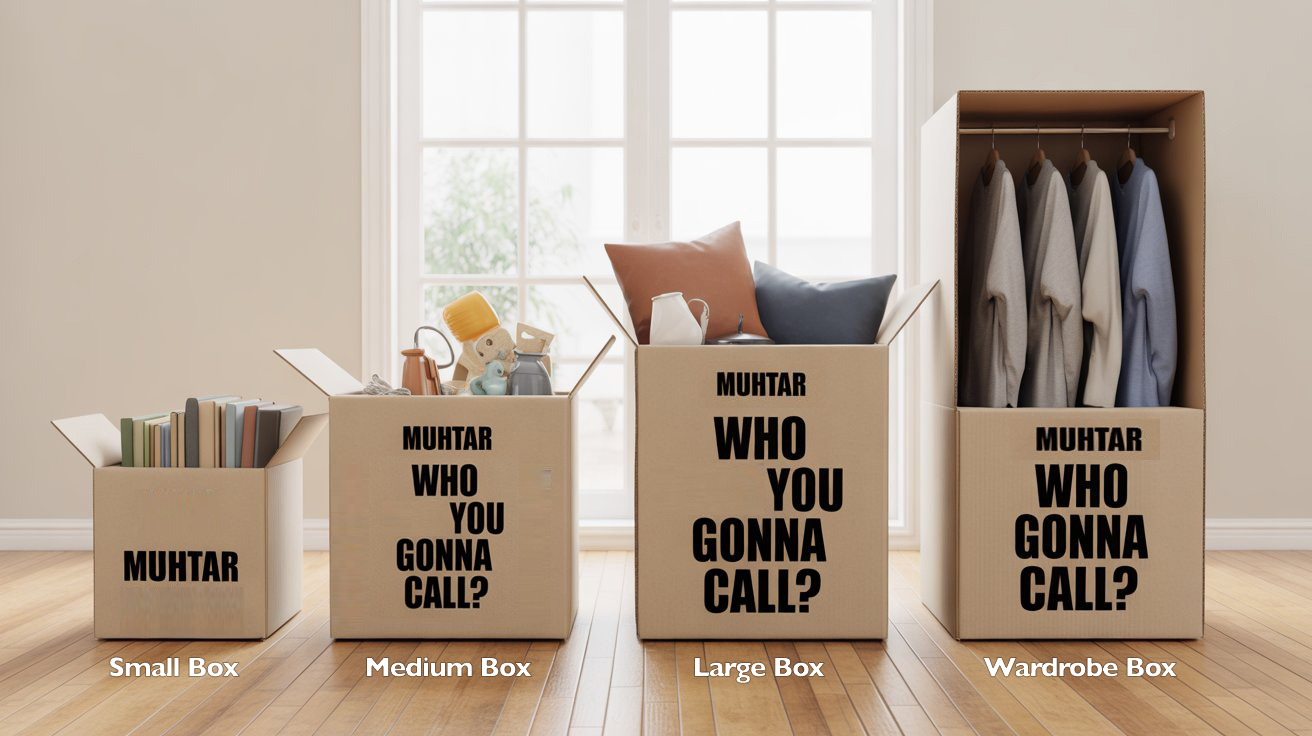
Best for: Heavy items like books, tools, canned goods, records, or small, dense objects. The small size prevents you from making boxes too heavy to lift safely.
Typical Dimensions: 16" x 12" x 12"
Best for: The most versatile option. Perfect for kitchenware, small appliances, toys, and most household items that aren't too heavy or too bulky.
Typical Dimensions: 18" x 18" x 16"
Best for: Bulky, lightweight items including pillows, bedding, blankets, large stuffed animals, and lampshades. Avoid putting heavy items in large boxes.
Typical Dimensions: 18" x 18" x 24"
Best for: Clothes on hangers. These tall boxes feature a metal bar, allowing you to move your closet without folding everything. It's a huge time-saver and prevents wrinkles.
Typical Dimensions: 24" x 24" x 40"
Use this chart as a starting point based on your home size
| Home Size | Small Boxes | Medium Boxes | Large Boxes |
|---|---|---|---|
| Studio / Dorm Room | 5 - 10 | 10 - 15 | 3 - 5 |
| 1 Bedroom Apartment | 10 - 15 | 15 - 25 | 5 - 10 |
| 2 Bedroom Home | 15 - 25 | 30 - 40 | 10 - 15 |
| 3 Bedroom Home | 25 - 35 | 40 - 50 | 15 - 20 |
| 4+ Bedroom Home | 35 - 50 | 50 - 70 | 20 - 30 |
Note: These are estimates. Your needs may vary depending on your lifestyle and how long you've lived in your home. It's always better to have a few extra boxes than to run out on moving day!
Learn from North America's trusted moving specialists
This is the golden rule of packing. It prevents boxes from becoming dangerously heavy and protects your back during the move.
Label the top and sides of each box with its contents and destination room (e.g., "KITCHEN - glasses and dishes").
Fill gaps in boxes with packing paper, towels, or soft linens to prevent items from shifting and breaking during transit.
Invest in strong packing tape. Tape the bottom and top seams, and add a couple of strips across for extra support.
Keep one box with essentials you'll need immediately: toiletries, medications, a change of clothes, phone chargers, and basic tools.
Keep important documents, jewelry, and sentimental items with you. Never pack them in the moving truck.
Expert answers to common moving box questions
Use the "H-Tape" method. Tape down the main seam where the flaps meet in the middle, then tape along the two short side seams. This creates a strong 'H' shape and fully secures the bottom and top of the box.
While possible, it's not always recommended. Used boxes may be structurally weak, have odd shapes, or carry contaminants from their previous contents. For the safety of your belongings, it's best to use proper moving boxes.
Use a medium box, often called a "Dish Pack" box if it comes with cell dividers. Wrap each plate in packing paper and stack them vertically (like records in a crate), not flat. They are much stronger this way. Fill all gaps with crumpled paper.
Start gathering boxes 6-8 weeks before your move. This gives you time to find the right sizes and quantities without rushing. Remember, different box types serve different purposes, so plan accordingly.
Never pack hazardous materials (paint, chemicals, propane), perishable food, important documents, jewelry, cash, or irreplaceable items. These should be transported separately or kept with you personally.
Now that you know how to pack properly, let North America's trusted moving specialists handle the heavy lifting.
Get Your Free Quote from Muhtar Movers